Bias gauge
See an estimate ranging from neutral toward highly biased on analyzed bills.
Constituent gives analyzed bills a Bias Assessment: an informational estimate of how slanted the legislation may be and who may stand to receive an unfair advantage.
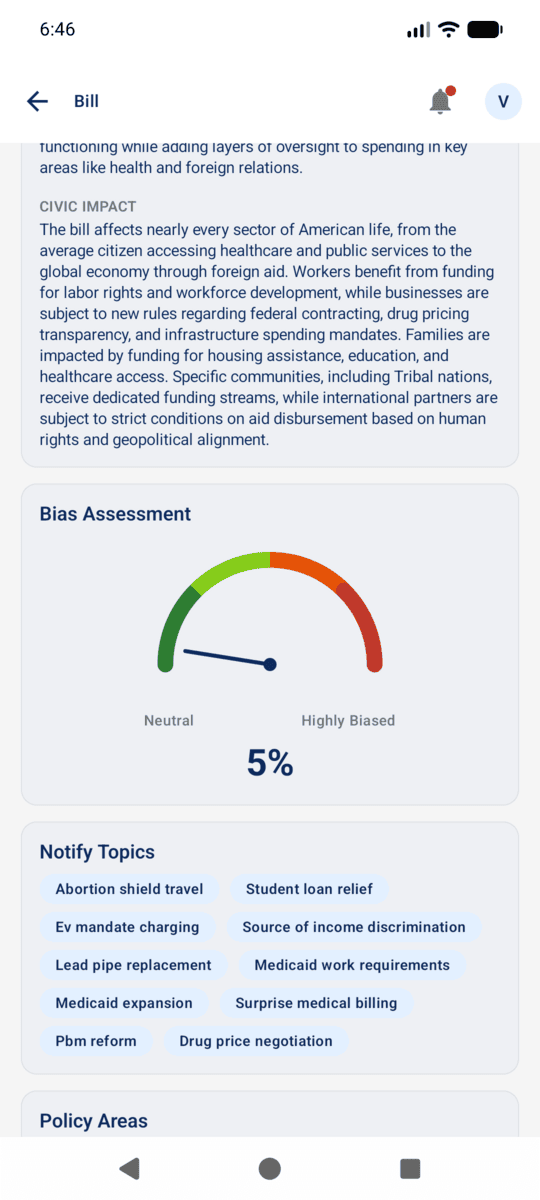
A bill can align with your preferences and still be written in a way that appears slanted. It can also conflict with your preferences without being assessed as highly biased. Constituent keeps the Bias Assessment separate from its personalized For or Against estimate so you can consider both kinds of information.
See an estimate ranging from neutral toward highly biased on analyzed bills.
Review information about who may stand to gain an unfair advantage from the legislation.
Compare the assessment with your personal values alignment instead of treating them as one score.
Begin with what the bill proposes, why it matters, and the available civic-impact information.
Consider the bias estimate and the explanation shown with the analyzed bill.
Confirm important conclusions against the legislation and records published by the jurisdiction.
The Bias Assessment is informational and AI-assisted. It is not a legal conclusion, a statement of objective fact, or a substitute for reading the legislation. Constituent does not tell you what political position to take. Always confirm important civic, legal, and election information with the relevant official source.
Use Constituent on the web or download the Android app. Assessments are informational and can be wrong.